Thinking about building a home in Murphy, NC? It can be an exciting path, especially if you want mountain views, more privacy, or a home designed around the way you live. But the process is not just about picking a floor plan and waiting for construction to finish. From lot research to permits to final inspections, there are several steps that need to line up before you get the keys. Let’s dive in.
Start With the Lot
Before you think about finishes, timelines, or builders, the first big question is whether the lot actually works for your plans. In the Murphy area, that means understanding where the property is located and which rules apply.
Cherokee County handles building code enforcement and inspections countywide, while the Town of Murphy adds zoning and utility requirements for properties inside town limits. Cherokee County is now operating under the 2024 North Carolina State Building Code, which became effective July 1, 2025.
Check Town or County Jurisdiction
If your lot is inside Murphy town limits, the Town of Murphy Planning Board handles items like rezonings, variances, subdivision applications, special use permits, and zoning certificates. According to the Town of Murphy Planning Board page, the board meets the first Wednesday of each month at 1 p.m., and applications can be submitted by email.
If your lot is outside town limits, Cherokee County will usually be your main point of contact for the building process. That distinction matters because the timeline, utility options, and zoning review can look different depending on where the property sits.
Confirm Water and Sewer Options
Utilities are one of the biggest lot-specific issues to sort out early. Inside Murphy town limits, properties with an accessible water main within 300 feet and an accessible sewer main within 200 feet must connect to the town system, according to the Town of Murphy utility FAQ.
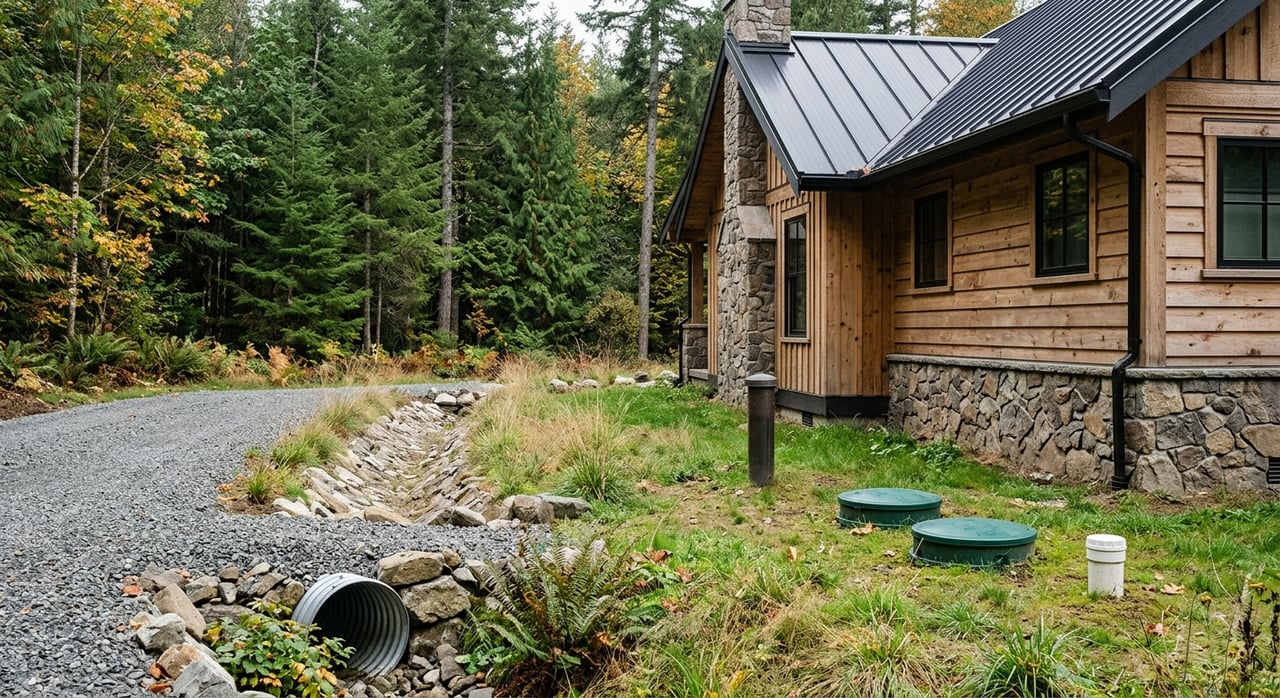
Wells and septic systems may only be allowed in limited circumstances inside town limits. Outside town, private well and septic are often part of the conversation, but Cherokee County Environmental Health must approve them before a residential permit can be issued.
Review Septic, Well, and Site Conditions
For residential permits, Cherokee County requires written approval for septic and well systems, or written approval to connect to water and sewer. The county’s Environmental Health department handles septic systems, wells, and water testing.
If you are considering a private well, North Carolina also offers a Well Permit Decision Tool through DEQ and DHHS to help identify known contamination sources near a proposed well site. It is a useful extra check during due diligence.
Watch for Floodplain and Land Disturbance Issues
Not every lot is equally simple to build on. If the property is near a river, lake, stream, or creek, floodplain and watershed rules may apply, based on Cherokee County guidance for residential permits.
The county also notes that if one acre or more will be disturbed, DEQ approval is required before the residential permit application. That means the build timeline can start stretching before construction even begins.
Check Recorded Restrictions and HOA Rules
A buildable lot also needs to fit any private restrictions attached to the property. If the lot is part of a planned community or HOA, recorded covenants can affect what you build and how you build it.
Under North Carolina law, the declaration creating the community is recorded like a deed and is enforceable by its terms. That is why reviewing recorded covenants before you buy is such an important part of lot due diligence, especially if you are planning a custom home.
Know What Cherokee County Requires
Once you have a lot that fits your goals, the next phase is getting ready for permits. In Cherokee County, you cannot start construction, plumbing, HVAC, or electrical work without first securing the required permits, according to the county’s permit information.
Gather the Required Documents
Cherokee County requires several items before issuing a residential permit. Based on the county’s residential permit page, you should expect to provide:
- A full set of plans
- Room labels and square footage
- The designer’s name, address, and signature
- Written septic and well approval, or approval to connect to water and sewer
- A 911 address
- A Notice of Lien Agent for residential projects over $40,000
The county also asks applicants to be ready with detailed driving directions from Downtown Murphy. It is a small detail, but it shows how local permit prep can include practical items buyers may not expect.
Understand Permit Timing
Residential permit applications are accepted Monday through Friday from 8:00 a.m. to 12:30 p.m. and 1:00 p.m. to 4:00 p.m. on a first-come, first-served basis, with no appointments, according to Cherokee County’s permit office page.
It is also important to know that permits do not stay open forever. The county says permits expire if work does not begin within six months of the application date or if work is suspended or abandoned for 12 months.
Consider Town Zoning Certificates
If your lot is inside Murphy town limits, a zoning certificate may also be part of the process. The town notes in its zoning materials that a certificate becomes invalid if substantial construction progress is not made within six months.
That means your calendar is not just about obtaining approvals. It is also about keeping your project moving once those approvals are in place.
Choose the Right Builder
Your builder can shape everything from the budget to the schedule to the overall experience. If the contract value is $40,000 or higher, North Carolina requires a general contractor license, and the North Carolina Licensing Board for General Contractors recommends verifying that license before signing a contract.
What to Ask a Builder
The state board’s consumer guidance suggests looking for more than a good price. Before you commit, ask for:
- License verification
- Several estimates for comparison
- A detailed written contract
- A payment schedule tied to completed work
- Clear start and finish dates
- A statement showing who is responsible for permits
- Proof of liability insurance and workers compensation coverage
- A warranty statement
These steps can help you avoid confusion later, especially if you are building from out of town and need clear expectations from the start.
Clarify Permit and Inspection Responsibility
One of the most important conversations with your builder is who will handle permits and inspections. The state board’s consumer contract guidance recommends making permit responsibility clear in the written agreement.
That matters because inspections are a required part of the local process, and delays can happen when responsibilities are vague. A strong contract should make this easy to understand before work begins.
Expect More Than a Construction Timeline
When buyers think about building, they often picture the months after the foundation is poured. In reality, the Murphy build timeline starts earlier and includes due diligence, approvals, permit prep, and coordination.
Nationally, 2024 Census data show that 46 percent of one-unit homes were completed in 4 to 6 months after construction started. Another 20 percent were completed in 7 to 9 months, while smaller shares took longer.
Local Steps Can Add Time
Those national numbers are helpful for context, but they are not a guarantee for Murphy. Local pre-construction steps can add time because Cherokee County requires utility or septic approval before the permit, and properties inside town limits may also need zoning-related approvals.
For many buyers, especially relocators or second-home buyers, the practical timeline is longer than the build itself. Lot evaluation, recorded restrictions, utility decisions, permits, and inspections all have to line up first.
Inspections Move the Build Forward
Cherokee County says regular inspections are generally completed within 24 to 48 hours after the request is received, with foundation inspections prioritized, according to the county’s inspection page.
The permit holder must post the inspection record poster on the job site until final inspection approval. At the end of the process, the county issues or denies the certificate of compliance or occupancy, which is the final local sign-off before move-in.
A Simple Murphy Build Roadmap
If you want to think about the process in plain English, here is the general path from lot to keys:
- Choose a lot and confirm whether it is inside or outside Murphy town limits.
- Review utility options, including town water and sewer or private well and septic.
- Check for floodplain concerns, land disturbance rules, and recorded covenants.
- Secure required approvals from Environmental Health or utility providers.
- Finalize plans and gather permit documents, including a 911 address.
- Apply for county permits and any town zoning approvals that apply.
- Hire a properly licensed builder and confirm responsibility for permits and inspections.
- Move through construction and required inspections.
- Receive final approval and certificate of compliance or occupancy.
- Get the keys and prepare for move-in.
How the Donna Srabian Team Can Help
If you are buying land or planning a build in Murphy, having local guidance can save you time and help you ask better questions before you commit. The biggest mistakes often happen early, when buyers assume every lot has the same utility options, restrictions, or approval path.
The Donna Srabian Team helps buyers navigate Murphy-area land and home purchases with local market knowledge, responsive guidance, and practical support for relocation and second-home decisions. If you want help finding a buildable lot or understanding what to look for before you buy, connect with the Donna Srabian Team and take the next step with more confidence.
FAQs
What does it mean if a lot is inside Murphy town limits?
- If a lot is inside town limits, the Town of Murphy may require zoning review, zoning certificates, and connection to town water and sewer when mains are within the required distance.
What does Cherokee County require before issuing a residential building permit?
- Cherokee County requires items such as plans, room labels and square footage, designer information, utility or septic and well approval, a 911 address, and in some cases a Notice of Lien Agent.
What utilities can a new home in Murphy use?
- Utility options depend on the lot location, because some in-town properties must connect to town water and sewer, while other properties may use private well and septic with county approval.
What should you verify before hiring a builder in North Carolina?
- You should verify the builder’s general contractor license when required, review insurance coverage, compare estimates, and make sure the written contract clearly explains payment terms, warranties, and permit responsibility.
How long does it take to build a home in Murphy, NC?
- After construction starts, national Census data show many single-family homes are completed in about 4 to 9 months, but Murphy-area projects may take longer when lot approvals, utility review, zoning, and permits are added to the timeline.
How quickly do Cherokee County inspections happen during construction?
- Cherokee County says regular inspections are generally completed within 24 to 48 hours after the request is received, with foundation inspections given priority.