Thinking about buying acreage near Brasstown? A beautiful tract can look perfect at first glance, but land value often comes down to what you can actually do with it. Before you make an offer, you need clear answers about road access, septic and well feasibility, and any county rules or recorded restrictions that could shape your plans. This guide walks you through the key checks so you can move forward with more confidence. Let’s dive in.
Why access matters first
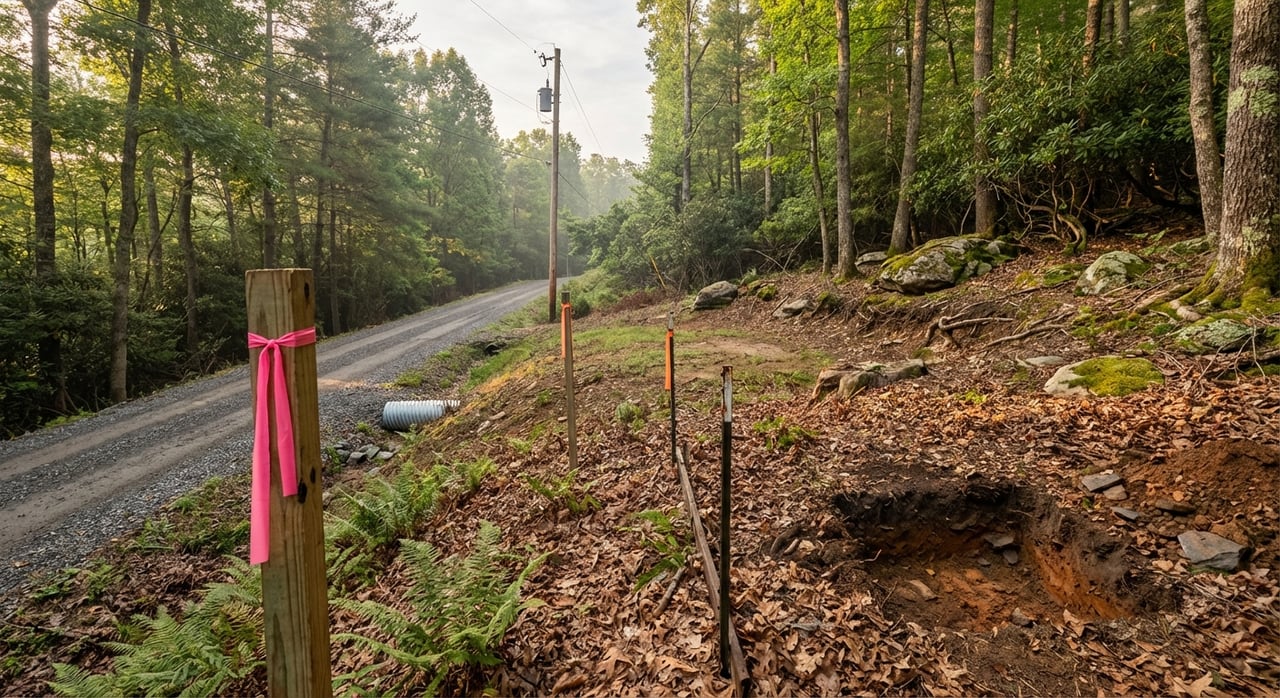
When you buy rural land near Brasstown, one of the first questions is simple: how do you legally and practically get to it? A parcel may appear easy to reach on a map, but access can involve road maintenance status, driveway approvals, and recorded rights-of-way.
Clay County also ties address verification into the building process. The county’s 911 Addressing office assigns permanent road addresses for residences and businesses, and the county says you should verify the project address before submitting a building permit to avoid delays.
Check road maintenance status
A good starting point is the NCDOT Public Street Information Database. NCDOT says this map shows the ownership or maintenance status of roads across North Carolina and helps distinguish state-owned roads from non-state-owned roads.
That matters because a road that is not state-maintained may be private or otherwise outside NCDOT maintenance. NCDOT also notes that the map is for reference only, so it should not be treated by itself as proof of state maintenance.
Look beyond the road surface
With acreage, access is not just about whether a car can reach the property today. You also want to know whether the parcel has legal access through a recorded easement or right-of-way, especially if the road is private or shared.
Clay County’s Environmental Health site plan checklist asks applicants to identify easements, rights-of-way, driveway locations, and property access on submitted plans. You can review that site plan checklist here. That is a strong sign that access details are important in site review.
Know when a driveway permit is required
If your tract fronts a state highway or you need to add or change an access point, a permit may be required. According to NCDOT’s driveway permit FAQ, a driveway permit is required to obtain or modify access to the State Highway System.
NCDOT says the permit review looks at design, drainage, traffic impacts, and safety. The agency also notes there is no fee to apply, although other project-related costs may still come up.
Septic and well feasibility can make or break a deal
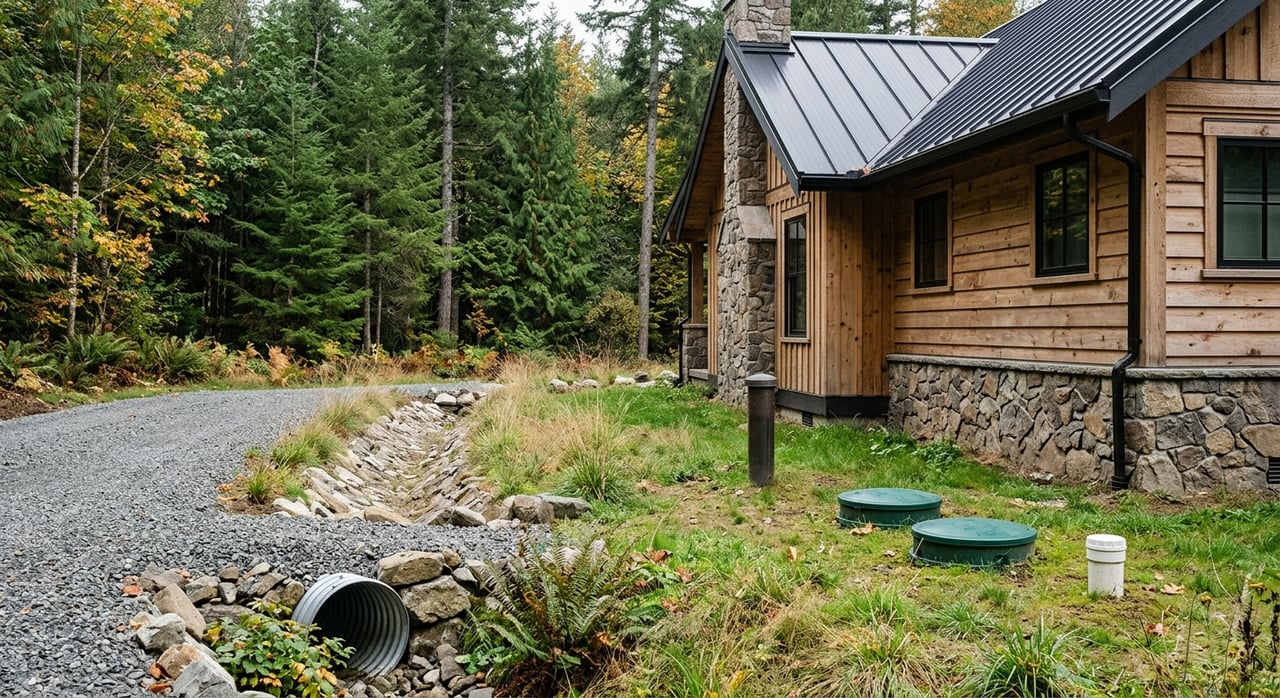
Acreage near Brasstown may not connect to public utilities, so septic and well questions often sit at the center of the buying decision. If the land cannot support the system you need, your plans may need to change.
Clay County Environmental Health handles private wells and wastewater systems through its Septic and Wells department. The county says a permit is required before construction, repair, or relocation of a private drinking-water well.
Understand the septic approval process
Clay County’s on-site wastewater information sheet outlines a typical three-step process:
- Improvement Permit
- Construction Authorization
- Operation Permit
According to the county’s wastewater information sheet, the Improvement Permit is often used in real estate transactions and is generally valid for 5 years. The county also says it may be transferable if site conditions and intended use stay the same.
That can be especially helpful if you are evaluating raw land before building. Instead of assuming a home site will work, you can ask whether an Improvement Permit already exists or whether one should be pursued during due diligence.
Prepare for site plan requirements
Environmental Health wants a detailed picture of the property before approving septic plans. The county’s current application says applicants must identify property lines, corners, existing and proposed structures, wells, water lines, septic locations, driveway areas, easements, utilities, wetlands, and buried streams or drains.
The same IP/CA application checklist says incomplete site plans can be returned, denied, or marked inactive, and a revisit fee may apply. For buyers, that is a reminder that “septic possible” is not enough. The details matter.
Building permits depend on utility approvals
Clay County makes the sequence clear on its building permit requirements page. If a property will use a well or septic system, Environmental Health approvals are required before you apply for a building permit.
The county also says new structures or additions outside an existing footprint near an existing septic system need Environmental Health approval. If the property will connect to county water or sewer, a letter of availability is required.
Plan for well testing
If a private well is part of your plan, testing is a required part of the conversation. The North Carolina Department of Health and Human Services says all newly constructed private wells in the state must be tested by the State Laboratory of Public Health or a state-certified commercial lab before the well is put into use, and testing should happen within 30 days of completion.
NCDHHS also recommends annual bacteria testing for well owners, with added testing for nitrates, metals, and certain chemicals depending on conditions. You can review those recommendations in the state’s private well water FAQ.
For added research, NC DEQ offers a Well Permit Decision Tool that can help identify known contamination sources near a proposed well site. That can be useful when evaluating acreage near industrial, agricultural, or wastewater-related land uses.
County rules and deed restrictions matter too
Many buyers assume a large tract means total freedom. In reality, county ordinances and recorded private restrictions can both affect how you use acreage near Brasstown.
Clay County’s ordinances page lists a range of rules, including subdivision ordinances, residential park development ordinances, RV ordinances, solar-farm ordinances, watershed protection, flood-damage prevention, and building-height ordinances. The takeaway is simple: acreage is not always unrestricted just because it is rural.
Ordinances and covenants are different
The North Carolina Real Estate Commission explains that zoning and restrictive covenants are separate issues, and both can materially affect property use. In its guidance on material facts in real estate, NCREC gives examples like operating a business from home, raising chickens, or parking an RV.
That distinction matters because a parcel might satisfy county rules but still be limited by private deed restrictions. Or the opposite could be true. You need to check both.
Ask early about HOAs and maintenance fees
If a property is subject to mandatory covenants or an owners’ association, that can come with dues, assessments, and use rules. NCREC notes in its guidance on property disclosures for association-governed properties that this information may need to be disclosed in many residential transfers.
For acreage buyers, the practical question is straightforward: ask whether the parcel is subject to an HOA, road-maintenance agreement, shared-drive costs, or any other recurring obligation before you assume the land is unrestricted.
Pull the public records
To verify the legal documents tied to a parcel, Clay County’s Register of Deeds is the official recording office for deeds, plats, deeds of trust, and other real estate records. This is where you can look for recorded easements, plats, and covenant documents.
The office also states that it is a recording office only and cannot give legal advice. If you need help interpreting a deed, plat, easement, or covenant, that is a job for a qualified attorney.
A practical pre-offer checklist
Before you go under contract on acreage near Brasstown, try to answer these questions:
- Is the road state-maintained, private, or otherwise non-state-owned?
- Does the parcel have clear legal access through a recorded easement or right-of-way if needed?
- Will a driveway permit be required for access to a state highway?
- Is there an Improvement Permit for septic, or should one be requested during due diligence?
- Can the property support a private well, and what testing or permitting steps will apply?
- Are there county ordinances, HOA rules, or deed restrictions that could affect your intended use?
- Have you reviewed the deed, plats, and recorded documents in the public record?
These questions may feel technical, but they can save you time, money, and frustration later. A little homework up front can help you avoid buying land that does not match your plans.
Common buyer concerns
Can you build on any acreage parcel?
Not safely to assume. Clay County requires Environmental Health approvals before a building permit when a property will use a well or septic system, and the parcel still needs to fit any applicable county ordinance or recorded restriction.
Is a private road a bad sign?
Not necessarily. A private road can work fine, but you should understand maintenance responsibility, legal access, and whether emergency and everyday access are practical.
Do existing wells still need attention?
Yes. NCDHHS recommends regular testing for private wells, especially after flooding, repairs, or changes in water quality.
Are deed restrictions the same as county rules?
No. County ordinances and private restrictive covenants are separate layers of control, and both can affect what you can do with the property.
If you are looking at land near Brasstown, having local guidance can make the process much smoother. The Donna Srabian Team helps buyers sort through mountain-market questions, compare properties, and move forward with a clearer plan for access, utilities, and next steps.
FAQs
What should you verify before buying acreage near Brasstown?
- You should verify road maintenance status, legal access, septic feasibility, well permitting needs, and any county ordinances or recorded restrictions tied to the parcel.
Does a parcel near Brasstown need septic approval before building?
- Yes, Clay County says Environmental Health approvals are required before applying for a building permit when the property will use a well and or septic system.
When is a driveway permit required for Brasstown-area land?
- A driveway permit is required when you need to obtain or modify access to the North Carolina State Highway System.
How can you check deed restrictions on Clay County acreage?
- You can pull deeds, plats, and other recorded documents through the Clay County Register of Deeds, then have a qualified attorney interpret their legal effect if needed.
Do private wells on Clay County land need testing?
- Yes, newly constructed private wells in North Carolina must be tested before use, and the state also recommends ongoing testing for well owners.
Are large parcels near Brasstown automatically unrestricted?
- No, large parcels can still be affected by county ordinances, private covenants, HOA rules, road agreements, or other recorded restrictions.